Part I – The History of Trazodone: How an Italian Discovery Changed Modern Psychiatry
Introduction
Few medications have had as fascinating a journey through medical history as trazodone. Introduced more than four decades ago, this unique antidepressant has remained remarkably relevant despite the development of dozens of newer psychiatric medications. While many antidepressants have come and gone, trazodone continues to be prescribed around the world for depression, insomnia, anxiety, and several off-label conditions.

Unlike many modern pharmaceuticals that quickly fade into history after being replaced by newer compounds, trazodone has earned a reputation for versatility, reliability, and a distinctive mechanism of action that sets it apart from many other antidepressants.
Today, millions of prescriptions for trazodone are written every year. Physicians appreciate its long history of clinical use, while patients often value its ability to improve both mood and sleep.
To understand why trazodone remains one of the most frequently prescribed antidepressants in the world, it is helpful to begin with its remarkable history.
The Search for Better Antidepressants
During the middle of the twentieth century, psychiatry was undergoing dramatic changes.
Before the 1950s, treatment options for depression were extremely limited. Physicians relied primarily on psychotherapy, hospitalization, electroconvulsive therapy, and medications that often produced severe side effects.
The first antidepressants, including monoamine oxidase inhibitors (MAOIs) and tricyclic antidepressants (TCAs), represented enormous breakthroughs. For the first time, doctors could effectively treat major depressive disorders using medication.
However, these early drugs were far from perfect.
Patients frequently experienced:
- severe drowsiness
- dry mouth
- constipation
- blurred vision
- weight gain
- dangerous interactions with food and other medications
- cardiovascular complications
Researchers recognized the need for medications that could provide antidepressant benefits while reducing unwanted adverse effects.
This challenge inspired pharmaceutical scientists around the world.
Italian Innovation
One of the companies leading psychiatric drug research during the 1960s was Angelini Research Laboratories in Italy.
Italian pharmacologists believed depression involved more than one neurotransmitter system.
Rather than simply increasing serotonin levels, they wanted to create a compound capable of restoring balance across multiple receptor pathways while minimizing some of the problems associated with older antidepressants.
After years of medicinal chemistry and laboratory testing, researchers synthesized a new molecule.
That molecule eventually became known as trazodone.
At the time, nobody imagined that this compound would still be widely prescribed more than fifty years later.
A New Scientific Philosophy
Most antidepressant research during that era focused on increasing neurotransmitters by preventing their breakdown or blocking their reuptake.
The scientists behind trazodone pursued a more sophisticated concept.
Instead of influencing only one biological pathway, they designed a medication capable of interacting with several serotonin receptors while also modestly inhibiting serotonin reuptake.
This multi-target approach was highly innovative for its time.
Decades later, neuroscientists would increasingly recognize that depression involves complex interactions among multiple neural systems rather than a single chemical imbalance.
In many ways, trazodone anticipated that modern understanding.
Early Clinical Trials
Following encouraging laboratory results, physicians began evaluating trazodone in patients suffering from depression.
The initial clinical trials demonstrated several encouraging observations.
Many patients experienced significant improvements in mood.
Some also reported reduced anxiety.
Others noticed something unexpected.
They began sleeping much better.
Researchers initially viewed this as simply another side effect.
Eventually, clinicians realized that improved sleep could actually become one of trazodone’s greatest therapeutic strengths.
Sleep disturbances affect a large proportion of individuals living with depression.
A medication capable of addressing both problems simultaneously represented an important advance.
Approval Around the World
Throughout the 1970s, trazodone gradually received regulatory approval in several European countries.
Psychiatrists appreciated that it differed from classical tricyclic antidepressants.
Although no medication is completely free of adverse effects, trazodone generally demonstrated a different side-effect profile than many older treatments.
As additional research accumulated, its international reputation continued to grow.
Arrival in the United States
The next major milestone occurred in 1981 when the United States Food and Drug Administration approved trazodone for the treatment of major depressive disorder.

American psychiatrists welcomed another treatment option.
During the following decade, prescriptions increased steadily.
By this time, physicians had accumulated valuable clinical experience.
They observed that trazodone often produced two distinct benefits.
First, it relieved depressive symptoms in many patients.
Second, many patients experienced improved sleep quality.
These observations would eventually influence how physicians used the medication in routine practice.
The Rise of SSRIs
The late 1980s and early 1990s introduced selective serotonin reuptake inhibitors (SSRIs), including fluoxetine.
Many experts predicted that older antidepressants would disappear from clinical practice.
Some indeed became far less common.
Trazodone did not.
Instead, it found an entirely new role.
Doctors increasingly prescribed lower doses to help patients experiencing insomnia, particularly when sleep problems occurred alongside depression or anxiety.
This adaptation demonstrated one of medicine’s recurring themes:
Sometimes the long-term value of a medication extends beyond its original purpose.
Why Physicians Continued Prescribing Trazodone
Several characteristics helped trazodone remain relevant.
Extensive clinical experience.
Unlike newer medications with only a few years of post-marketing data, trazodone accumulated decades of practical use across millions of patients.
Flexible dosing.
Lower doses were commonly associated with sedative effects, while higher doses were used in treating depression.
Generic availability.
As patents expired, generic manufacturers made trazodone available worldwide at relatively affordable prices.
Multiple therapeutic roles.
Physicians found it useful in carefully selected patients with depression, insomnia, anxiety, and other conditions when clinically appropriate.
This versatility distinguished trazodone from many antidepressants that primarily served one indication.
Scientific Understanding Continues to Evolve
During the last twenty years, neuroscience has advanced enormously.
Researchers now understand much more about serotonin receptors, neurotransmission, sleep regulation, and mood disorders.
Interestingly, many of these discoveries have reinforced appreciation for trazodone’s pharmacology.
Rather than acting solely through serotonin reuptake inhibition, trazodone influences several receptor systems.
This broader activity may help explain why its clinical profile differs from many antidepressants developed later.
Modern research continues exploring these mechanisms.
Worldwide Popularity
Today, trazodone is prescribed throughout North America, Europe, Australia, Asia, and numerous other regions.
Millions of patients have received the medication over the decades.
Its longevity is remarkable in an industry where newer pharmaceuticals frequently replace older ones within a relatively short period.
The continued use of trazodone reflects an important principle in medicine:
Newer does not always mean better.
Sometimes a well-understood medication with decades of clinical experience remains an excellent therapeutic option when selected appropriately by a healthcare professional.
Lessons from History
The history of trazodone illustrates several broader lessons about pharmaceutical innovation.
First, scientific progress is gradual.
Developing a successful medication often requires years of laboratory research, clinical investigation, regulatory review, and post-marketing observation.
Second, medications sometimes prove valuable in ways researchers never fully anticipated.
Although trazodone was developed primarily as an antidepressant, its role in managing sleep disturbances became one of its defining characteristics.
Finally, the story of trazodone demonstrates the importance of long-term clinical evidence.
After more than forty years of worldwide use, physicians possess an extensive understanding of its benefits, limitations, safety profile, and appropriate clinical applications.
Few antidepressants have accumulated such a rich body of practical experience.
Looking Ahead
Understanding where trazodone came from helps explain why it continues to occupy a unique position in modern psychiatry.
Its history is not merely a timeline of approvals and prescriptions—it is the story of scientific curiosity, careful research, and continuous clinical observation.
In the next chapter, we will explore exactly what trazodone is, how it is classified, how it differs from other antidepressants, and why it continues to play an important role in treating depression and sleep disorders in the twenty-first century.
Part II – What Is Trazodone? Understanding One of the World’s Most Versatile Antidepressants
Introduction
Although trazodone has been prescribed for more than forty years, many people are still surprised to learn that it is much more than simply an antidepressant. In modern clinical practice, physicians prescribe trazodone for several different reasons, and its unique pharmacological profile distinguishes it from many other medications used in psychiatry.
Some patients first encounter trazodone while seeking treatment for depression. Others are introduced to it because of chronic insomnia or sleep disturbances associated with anxiety. In either situation, understanding what trazodone is—and what it is not—can help patients make informed decisions together with their healthcare providers.
What Exactly Is Trazodone?
Trazodone is a prescription medication primarily approved for the treatment of major depressive disorder (MDD). It belongs to a pharmacological class known as serotonin antagonist and reuptake inhibitors (SARIs).
Unlike many antidepressants that mainly increase serotonin concentrations, trazodone has a dual mechanism. It both inhibits serotonin reuptake and selectively blocks certain serotonin receptors. This combination contributes to its distinctive clinical effects.
Because of this receptor profile, trazodone is often considered one of the more pharmacologically diverse antidepressants available today.
Classification
Trazodone is not classified as:
- a benzodiazepine
- a sleeping pill
- an opioid
- a stimulant
- a controlled substance in many countries
Instead, it is an antidepressant with additional properties that may benefit carefully selected patients who also experience sleep disturbances or anxiety.
Its classification has remained largely unchanged since its introduction, even as newer antidepressant classes such as SSRIs and SNRIs entered the market.
Active Ingredient
The active pharmaceutical ingredient is trazodone hydrochloride.
It is available in several formulations depending on the country, including:
- Immediate-release tablets
- Extended-release tablets
- Generic formulations
- Brand-name products
Today, generic trazodone is widely available, making it one of the more affordable antidepressant options in many healthcare systems.
Approved Medical Uses
The primary approved indication is major depressive disorder.
Symptoms of depression may include:
- persistent sadness
- loss of interest
- fatigue
- reduced concentration
- changes in appetite
- feelings of hopelessness
- sleep disturbances
Depression affects hundreds of millions of people worldwide, making it one of the leading causes of disability according to international public health organizations.
Appropriate treatment may include psychotherapy, lifestyle interventions, medication, or a combination of these approaches.
Why Doctors Also Prescribe It for Sleep
One of the most interesting aspects of trazodone is that many physicians prescribe it at relatively low doses for patients experiencing insomnia.
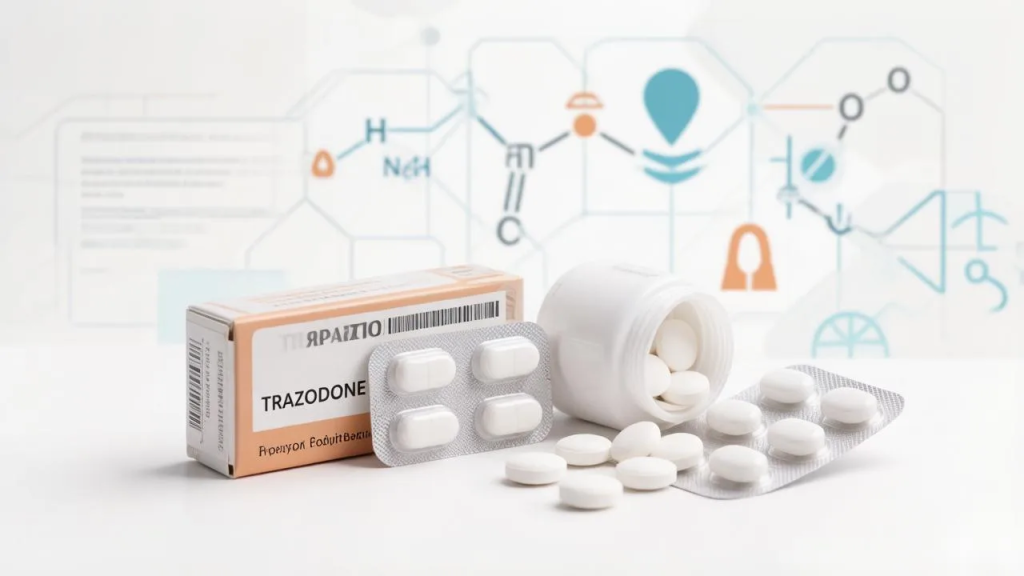
Sleep problems frequently accompany depression and anxiety disorders.
Many individuals report:
- difficulty falling asleep
- waking repeatedly during the night
- early morning awakening
- poor sleep quality
Although insomnia can occur independently, it is also one of the most common symptoms associated with mood disorders.
Because trazodone commonly produces sedation, clinicians may prescribe it in carefully selected patients whose depression is accompanied by significant sleep disruption.
The decision always depends on the individual’s medical history, current medications, and overall treatment goals.
Off-Label Uses
Like many well-established medications, trazodone is sometimes prescribed for conditions beyond its officially approved indication when supported by clinical judgment and available evidence.
Examples may include:
- chronic insomnia
- anxiety symptoms
- sleep disturbances associated with depression
- certain stress-related sleep problems
Off-label prescribing is a common and accepted aspect of medical practice when supported by appropriate evidence and individualized patient assessment.
Why Trazodone Is Different
Many antidepressants primarily increase serotonin activity.
Trazodone is different because it interacts with multiple neurotransmitter systems simultaneously.
Researchers believe this contributes to several characteristic features.
Many patients experience:
- improved sleep
- reduced nighttime awakening
- gradual improvement in depressive symptoms
- relatively low risk of dependence compared with many traditional sleeping medications
These characteristics have helped maintain trazodone’s popularity for decades.
Who May Benefit?
Physicians evaluate numerous factors before prescribing trazodone.
It may be considered for adults experiencing:
- major depressive disorder
- depression accompanied by insomnia
- anxiety associated with sleep difficulties
- situations in which improving sleep is an important component of treatment
However, every patient is different.
The most appropriate medication depends upon:
- age
- medical history
- cardiovascular health
- liver function
- kidney function
- other medications
- previous response to antidepressants
- individual treatment goals
Who Should Use Caution?
Like all prescription medicines, trazodone is not appropriate for everyone.
Healthcare providers carefully evaluate patients with:
- significant heart rhythm disorders
- severe liver disease
- certain drug interactions
- known hypersensitivity to trazodone
Pregnancy, breastfeeding, and pediatric use require individualized medical assessment.
Is Trazodone Addictive?
One of the questions physicians hear most frequently is whether trazodone causes addiction.
Current evidence indicates that trazodone is not considered physically addictive in the way opioids, benzodiazepines, or certain sedative-hypnotics can be.
However, this does not mean patients should stop taking it abruptly.
Sudden discontinuation may produce withdrawal-like symptoms in some individuals, which is why healthcare professionals generally recommend gradual dose reduction when discontinuing therapy.
How Long Has It Been Used?
Few psychiatric medications remain widely prescribed after more than four decades.
Trazodone is one of those exceptions.
Its long history provides physicians with extensive real-world experience regarding:
- effectiveness
- safety
- dosing strategies
- common side effects
- long-term clinical outcomes
This accumulated experience contributes significantly to physician confidence when considering trazodone for appropriate patients.
Why It Continues to Matter
Medicine changes rapidly.
New antidepressants appear regularly, bringing new mechanisms, formulations, and marketing campaigns.
Yet trazodone continues to occupy a unique place in psychiatric practice.
Its combination of antidepressant activity, sleep-supporting properties, broad clinical experience, and widespread availability has allowed it to remain relevant across several generations of psychiatric treatment.
Rather than replacing newer medications, trazodone complements them by offering physicians another evidence-based option for individualized patient care.
Looking Ahead
Now that we understand what trazodone is, the next logical question is how it actually works inside the brain.
The answer involves one of the most fascinating areas of modern neuroscience: the complex interactions between serotonin receptors, neurotransmitters, sleep regulation, and emotional processing.
In this article we explain how to purschase Trazodone online